

Advanced Materials & Components for Liquid Rocket Engine Thrust Chambers
Engineered for Extreme Thermal Environments
High-Strength, High-Thermal-Conductivity Copper Alloys for Advanced Rocket Propulsion
Liquid rocket engine thrust chambers operate under some of the most extreme thermal conditions in modern engineering.
Combustion temperatures can exceed 3,000°C, while the thrust chamber wall must simultaneously withstand severe thermal loading, high-pressure combustion gases and high-velocity gas flow.
EDAL provides advanced high-strength, high-thermal-conductivity copper alloy materials and components for liquid rocket engine thrust chamber applications.
Our material solutions include:
Copper-Chromium-Zirconium (CuCrZr)
Copper-Chromium-Niobium (CuCrNb)
These advanced copper alloys are designed for applications requiring an exceptional combination of:
High thermal conductivity
High-temperature strength
Thermal fatigue resistance
Structural reliability
Compatibility with regenerative cooling structures
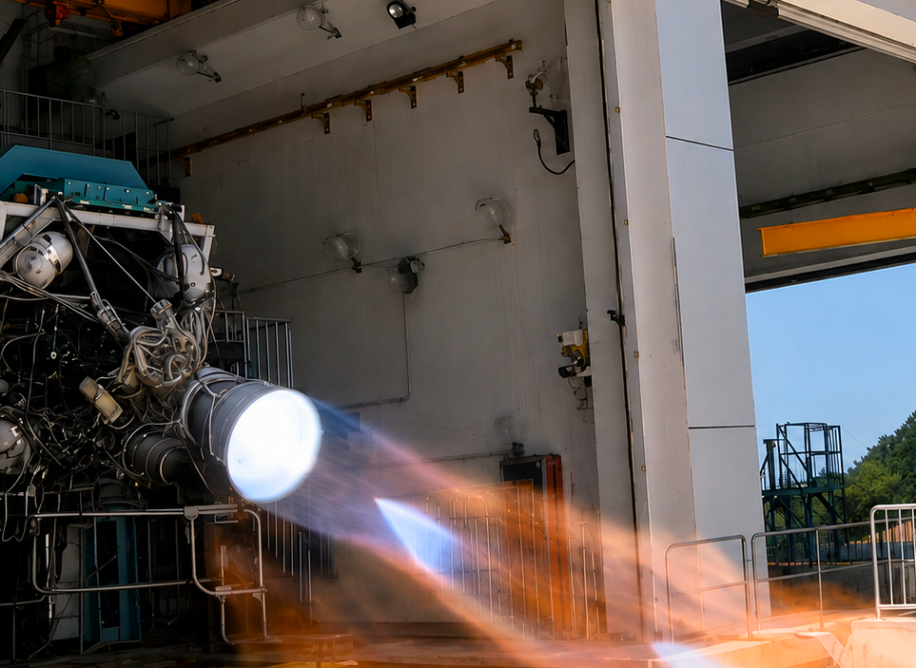
The Heart of Liquid Rocket Propulsion
The thrust chamber is one of the most critical components of a liquid rocket engine.
It is the location where propellant combustion generates the high-temperature and high-pressure gases required to produce thrust.
The inner wall of the thrust chamber forms the primary barrier between the combustion environment and the engine structure.
During operation, this critical structure is exposed to:
Extreme Combustion Temperatures
Temperatures inside the combustion chamber can exceed 3,000°C.
High-Pressure Gas Loads
The chamber wall must withstand severe pressure and thermal loading during engine operation.
High-Velocity Combustion Gas Flow
The hot-gas-side surface is continuously exposed to intense gas flow and thermal erosion.
Repeated Thermal Cycling
Reusable rocket engines require materials and structures capable of withstanding repeated ignition and shutdown cycles.
The Core Technology: Active Regenerative Cooling
Copper alloys do not independently withstand combustion temperatures exceeding 3,000°C.
The melting point of copper-based alloys is approximately 1,080°C.
The key to their successful application in rocket thrust chambers is Active Regenerative Cooling.
Before entering the combustion chamber, low-temperature propellant flows through a network of cooling channels integrated into the thrust chamber structure.
The high thermal conductivity of CuCrZr and CuCrNb rapidly transfers heat away from the hot-gas-side wall and toward the cooling propellant.
The heat is then carried away by the propellant.
This engineering principle combines:
Advanced High-Thermal-Conductivity Materials
+
Precision Cooling-Channel Structures
+
Active Regenerative Cooling
Through this integrated thermal-management approach, copper alloys with melting points far below the combustion-gas temperature can maintain structural integrity in an environment where gas temperatures approach or exceed 3,000°C.
Integral Copper-Alloy Hot-Gas Wall Technology
A critical feature of EDAL's thrust chamber solution is the design of the hot-gas-side structure.
The surface directly exposed to the high-temperature combustion gases is an:
Integral Solid CuCrZr or CuCrNb Component
It is not a thin copper coating deposited onto a substrate made from another metal.
The copper-alloy component forms the actual structural hot-gas wall.
A large number of cooling channels are precisely machined into the backside of the component.
The copper-alloy structure is subsequently combined with a high-temperature alloy outer shell.
Metallurgical Bonding Through Hot Isostatic Pressing
The copper-alloy inner structure and the outer high-temperature alloy structure are joined through:
Hot Isostatic Pressing (HIP)
This process creates a metallurgical diffusion bond between the materials.
The resulting structure is integrated at the metallurgical level rather than being held together through:
Mechanical interference
Conventional shrink fitting
Simple sleeve-type assembly
This approach is particularly important for reusable rocket engine applications.
Designed for Reusable Rocket Engines
During repeated engine ignition cycles, the thrust chamber experiences continuous heating and cooling.
When dissimilar materials are connected through a conventional sleeve-type structure, differences in thermal expansion can create gaps between the materials during repeated thermal cycling.
Such gaps can reduce thermal-transfer efficiency and negatively affect the cooling performance of the thrust chamber.
EDAL's metallurgical bonding approach is designed to provide a more integrated structure for applications requiring:
Repeated ignition cycles
Severe thermal cycling
Efficient heat transfer
Long-term structural reliability
Reusable engine operation
From Advanced Materials to Finished Components
EDAL has established capabilities extending from advanced material production to finished rocket engine components.
The technological challenge in this industry is not simply the chemical composition of the material.
The real barriers to industrial application include the ability to achieve consistent and scalable production across the entire manufacturing process.
EDAL's development focus covers the industrial process chain from:
Advanced Materials
↓
Material Preparation
↓
Manufacturing & Processing
↓
Precision Machining
↓
Cooling-Channel Structures
↓
Surface Engineering & Coating
↓
Metallurgical Joining
↓
Finished Parts & Components
This integrated approach supports the industrial-scale production of materials and components for liquid rocket engine thrust chambers.
Industrialization Capability
To address the rapidly growing demand for commercial space and liquid rocket propulsion technologies, EDAL has launched its:
Liquid Rocket Engine Thrust Chamber Materials, Parts and Components Industrialization Project
The first phase of the project is planned with an investment of:
USD 100 Million
Upon reaching full production capacity, the project is expected to achieve annual production of approximately:
800 Sets
of liquid rocket engine thrust chamber-related components, including:
Inner-wall components
Outer-wall components
Precision parts
Related assemblies
As of the end of 2025, EDAL had established finished-product manufacturing capacity exceeding:
500 Units/Sets Per Year
Engineering Materials for the Technologies of Tomorrow
Contact info@edal-inc.com to discuss your advanced material and component requirements.
-

EDAL SINGAPORE BRANCH
2026-09-23 -
Advanced Materials & Components for Liquid Rocket Engine Thrust Chambers
2026-09-02 -
Update of ISO 9001:2015 Certificate
2026-04-11 -
GRCop-42/C18150 in Rocket Thrust Chambers: Material Science and Engineering Perspective
2026-04-20 -

The properties of Sn–Zn–Al–La fusible alloy for mitigation devices of solid propellant rocket motors
2025-06-09 -
Introduction of Niobium Tungsten alloy materials
2025-01-09 -
Boron nitride coating
2024-10-31 -
Scientists from the United States, Japan and South Korea have discovered five new isotopes
2024-10-10 -
Porous tantalum materials for surgical implants
2024-05-29 -
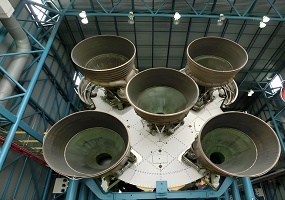
The application of niobium alloy and its coating for aerospace applications, and the development of other aerospace alloy materials are introduced
2024-05-13 -
Superconducting applications of Niobium
2024-05-07 -
Method for determination of niobium content in Ti45Nb alloy
2023-09-14 -
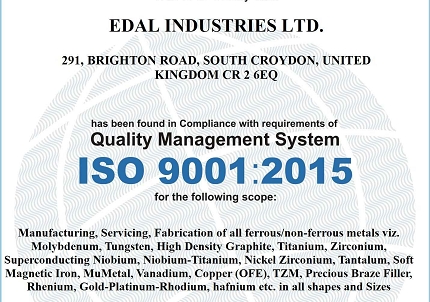
ISO 9001:2015 Certificate
2023-04-09 -
Niobium sheet with wide width barrier layer for superconducting wire
2022-12-29 -
Method of producing superconducting niobium pipe
2022-12-30
